

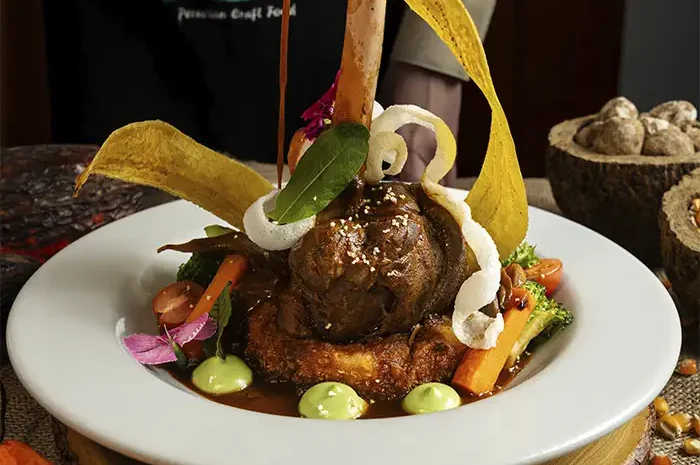
What is Canilla de Cordero? This comforting lamb shank dish is a delicious way to discover how slow cooking and ingredients from Peru's highlands come together on one plate.
If you are exploring Peruvian cuisine in Cusco, you may already know about ceviche, Lomo Saltado or alpaca. But there is much more to discover beyond the country's most internationally recognized dishes.
Canilla de Cordero offers a different experience: tender lamb, rich sauces and accompaniments that reflect the creative possibilities of Andean cooking.
In this guide, discover what Canilla de Cordero means, how lamb shank is prepared, where Kusykay sources its lamb, and where to try this specialty in Cusco.
Slow Cooking, Rich Flavors and Andean Inspiration
At Kusykay, Canilla de Cordero brings together slow-cooked lamb from Ayaviri, cassava croquettes, mushrooms and a rich wine sauce.
The result is a generous dish that celebrates the flavor of lamb through a contemporary Peruvian presentation.
Discover our Canilla de Cordero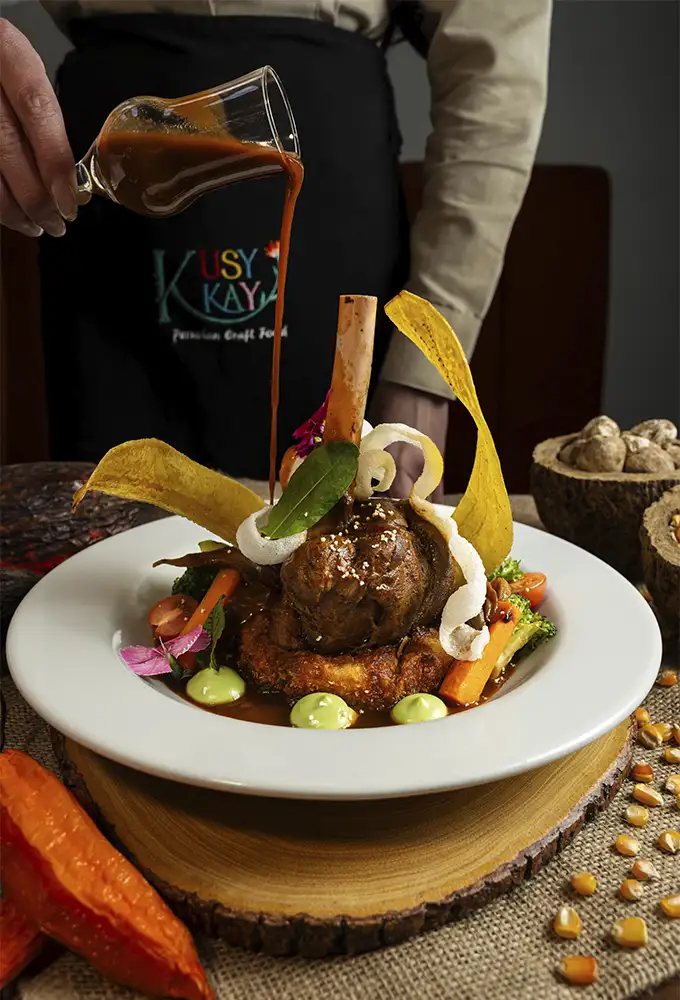
What Is Canilla de Cordero?
Canilla de Cordero refers to a lamb shank, a cut of meat taken from the lower part of a lamb's leg.
The shank contains muscle and connective tissue that respond particularly well to slow, moist cooking.
When prepared carefully, this method produces tender meat and a rich, flavorful sauce.
In Peru, restaurants may prepare lamb shank using their own combinations of herbs, vegetables, sauces and regional accompaniments.
Lamb Shank
Meat from the lower leg, valued for its flavor when cooked slowly.
Slow Cooking
A gentle cooking method that helps the meat become tender.
Rich and Savory
A hearty dish often accompanied by vegetables, potatoes or other side dishes.
Lamb and Andean Cuisine in Peru
Peru's highland food culture reflects a long history of agricultural traditions, regional ingredients and cultural exchange.
Sheep were introduced to Peru during the Spanish colonial period and gradually became part of livestock farming in the Andes.
Over time, lamb and mutton became ingredients in various regional dishes, alongside foods already associated with Andean cooking.
This history is important: lamb is not a pre-Hispanic Andean animal like the alpaca or llama. Its place in Peruvian cuisine reflects how food traditions have continued to evolve.
Today, lamb can be enjoyed in soups, stews, roasted preparations and contemporary restaurant dishes.
A culinary distinction: Canilla de Cordero is a lamb shank preparation, not the same dish as traditional Cordero al Horno. Different recipes may share the same principal ingredient while using different cooking techniques and sauces.
For additional historical context, explore research on livestock introduced during colonial Peru .
Why Is Lamb Shank Slow-Cooked?
Lamb shank comes from a hardworking part of the animal, which means it contains connective tissue.
Cooking it gently over a longer period allows this tissue to soften and contributes to the dish's characteristic texture.
Rather than rushing the process, the cook gives the meat time to develop tenderness and absorb surrounding flavors.
Preparing the Lamb
The shank is prepared for cooking and may be seasoned according to the kitchen's recipe.
Developing Flavor
Some recipes begin by browning the meat to build savory flavor before slow cooking.
Cooking Slowly
Gentle heat and moisture help soften the meat over time.
Serving with Accompaniments
The finished shank is served with a sauce and sides that complement its savory character.
These are general cooking principles, rather than an exact recipe from Kusykay's kitchen.
What Does Andean Lamb Shank Taste Like?
A well-prepared lamb shank has a distinctive savory flavor and a tender, satisfying texture.
Lamb generally has a more pronounced flavor than mild meats such as chicken, although its intensity can vary by age, cut and preparation.
Slow cooking allows the meat to become tender and gives sauces and seasonings time to develop a rich combination of flavors.
A memorable lamb shank is about more than the meat: it is the balance of slow cooking, sauce and thoughtful accompaniments.
Is Canilla de Cordero Spicy?
Not necessarily. The level of spice depends on the recipe and seasonings used.
If you prefer mild food or have dietary restrictions, ask your server about the ingredients before ordering.
From Ayaviri to Cusco: The Origin of Kusykay's Lamb
Ayaviri is a town in Peru's Puno region, in the southern Andean highlands.
This high-altitude landscape is closely associated with livestock farming and rural food traditions.
According to Kusykay's current menu, the lamb used in its Canilla de Cordero comes from Ayaviri.
The dish connects an ingredient from the southern highlands with a dining experience in Cusco's historic center.
Where is Ayaviri? Ayaviri is located in the province of Melgar, in the Puno region of southern Peru. It is not a neighborhood of Cusco.
Canilla de Cordero at Kusykay Peruvian Craft Food
At Kusykay, Canilla de Cordero is presented as an Andean-inspired main course.
The restaurant uses slow-cooked lamb from Ayaviri and serves it with cassava croquettes and mushrooms in wine sauce.
Canilla de Cordero – Andean Lamb Shank
A slow-cooked lamb specialty featuring:
- Lamb shank sourced from Ayaviri.
- Slow cooking for a tender texture.
- Cassava croquettes.
- Mushrooms.
- Rich wine sauce.
The cassava croquettes offer a contrasting texture, while the mushrooms and wine sauce complement the lamb.
This is Kusykay's own interpretation, rather than a universal recipe for every lamb shank dish in Peru.
Where to Try Andean Lamb Shank in Cusco
If you are exploring Peruvian food near Plaza de Armas, Kusykay offers Canilla de Cordero as part of its main menu.
The restaurant is located on the second floor of Calle Triunfo 338 A, a short walk from Cusco's main square.
Its menu combines traditional Peruvian dishes with contemporary interpretations of Andean ingredients.
Before visiting, you can browse the Kusykay menu or explore the guide to Peruvian dishes to try in Cusco .
Is This Dish Suitable for Everyone?
Canilla de Cordero contains lamb and is served with a wine-based sauce.
If you avoid alcohol, have allergies or follow specific dietary requirements, confirm the preparation with the restaurant team.
Frequently Asked Questions About Canilla de Cordero
What does Canilla de Cordero mean?
Canilla de Cordero refers to lamb shank, the lower part of a lamb's leg. It is a cut often prepared through slow cooking.
Is Canilla de Cordero a Peruvian dish?
Lamb is used in different Peruvian regional dishes. Canilla de Cordero can be prepared with a variety of sauces and accompaniments. Kusykay offers an Andean-inspired interpretation.
Why is lamb shank cooked slowly?
Lamb shank contains connective tissue that softens during slow, moist cooking, helping create a tender texture.
What is served with lamb shank at Kusykay?
Kusykay serves its lamb shank with cassava croquettes and mushrooms in wine sauce.
Where does Kusykay's lamb come from?
Kusykay's menu identifies Ayaviri, in Peru's Puno region, as the source of its lamb.
Where can I try lamb shank in Cusco?
Kusykay Peruvian Craft Food serves Canilla de Cordero near Plaza de Armas, at Calle Triunfo 338 A, second floor.
Does the dish contain wine?
Yes. Kusykay describes its Canilla de Cordero as being served with wine sauce. Ask the team about the preparation if you avoid alcohol.
Discover Andean Lamb at Kusykay
Experience slow-cooked lamb from Ayaviri, served with cassava croquettes, mushrooms and wine sauce in the heart of Cusco.
Explore Our Andean Lamb Shank