

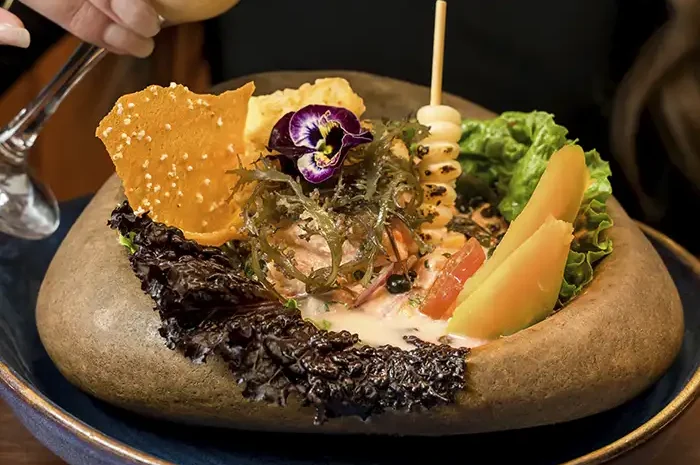
Few dishes capture the freshness, bold flavors, and culinary identity of Peru quite like Peruvian ceviche. Made with fresh fish, lime juice, chili peppers, and red onions, this iconic preparation is one of the country's most celebrated gastronomic traditions.
At the heart of ceviche is leche de tigre, or "tiger's milk": the vibrant, citrus-based liquid that brings together the distinctive flavors of the dish.
From Peru's Pacific coast to contemporary Andean interpretations featuring trout, ceviche offers visitors an unforgettable introduction to Peruvian cuisine.
If you are wondering where to eat ceviche in Cusco, understanding its ingredients, traditions, and regional variations is a great place to begin.
What Is Peruvian Ceviche?
Peruvian ceviche is a traditional seafood dish prepared by combining raw fish with fresh lime juice, chili peppers, red onions, and salt.
The acidity of the lime changes the texture and appearance of the fish, creating the distinctive consistency associated with ceviche.
Unlike dishes prepared with heat, traditional ceviche relies on citrus acidity to transform the fish's proteins. This process does not make raw fish equivalent to fully heat-cooked seafood.
In Peru, ceviche is commonly accompanied by sweet potatoes, corn, and other ingredients that balance its bright and refreshing flavors.
Culinary heritage: In 2023, UNESCO inscribed the practices and meanings associated with preparing and consuming ceviche on its Representative List of the Intangible Cultural Heritage of Humanity.
What Is Leche de Tigre? The Secret Behind Peruvian Ceviche
Leche de tigre, literally translated as "tiger's milk," is the citrus-based liquid associated with traditional Peruvian ceviche.
It brings together lime juice with the juices and flavors released by fish, chili, onion, and other seasonings.
Its characteristic taste is bright, tangy, savory, and sometimes spicy. Recipes vary between cooks, regions, and restaurants.
Some contemporary versions prepare leche de tigre separately, blending fish or seafood ingredients with citrus and aromatics to create a more concentrated sauce.
Why Is It Called Tiger's Milk?
The name is part of Peru's popular culinary vocabulary. Traditionally, leche de tigre has also been associated with beliefs about vitality and energy.
These cultural associations are not established medical benefits, but they illustrate the special place this preparation holds in Peruvian food culture.
Leche de tigre brings together the citrus, chili, and savory notes that make Peruvian ceviche so distinctive.
The Essential Ingredients of Traditional Peruvian Ceviche
Traditional ceviche relies on a few ingredients, carefully combined to create its characteristic balance of freshness, acidity, and heat.
Fresh Fish
Fish is the foundation of traditional ceviche. Different regions use different species, including freshwater trout in some Andean preparations.
Fresh Lime
Lime provides the distinctive acidity that changes the fish's texture and creates the citrus character of ceviche.
Peruvian Chili
Chili peppers such as ají limo bring aroma, freshness, and varying levels of heat.
Red Onion
Thinly sliced red onions contribute a crisp texture and distinctive flavor that balances the citrus marinade.
Traditional Ceviche Accompaniments
Peruvian ceviche is often served with ingredients that balance its tangy and spicy profile.
- Sweet potatoes, which provide natural sweetness.
- Choclo, or large-kernel Andean corn.
- Fresh herbs and regional garnishes, depending on the recipe.
- Additional seafood accompaniments in certain variations.
Peruvian Ceviche: A Culinary Tradition
Ceviche is much more than a popular seafood dish. It is an expression of Peru's culinary traditions, local ingredients, and shared food culture.
Its preparation varies across different regions, reflecting the country's geographic and gastronomic diversity.
The dish has a particularly strong association with coastal Peruvian cuisine, while regional interpretations can incorporate different fish and local ingredients.
Its international recognition has helped introduce visitors to the distinctive flavors of Peru, while its cultural importance extends well beyond restaurant menus.
Trout Ceviche in Cusco: An Andean Interpretation
While coastal ceviche is often prepared with marine fish, trout ceviche offers a different experience inspired by the ingredients of Peru's Andean region.
Peruvian trout ceviche combines freshwater trout with citrus, chili, and familiar ceviche accompaniments.
This preparation is particularly relevant for travelers exploring the culinary diversity of Cusco, where Andean ingredients play an important role in contemporary cuisine.
It offers an opportunity to discover how one of Peru's most iconic dishes can be interpreted using ingredients connected to the highlands.
Where to Eat Peruvian Ceviche in Cusco
If you are looking for Peruvian ceviche in Cusco, Kusykay Peruvian Craft Food offers several preparations featuring trout and traditional Peruvian ingredients.
Located near the Plaza de Armas in Cusco's historic center, Kusykay brings together Andean ingredients and Peruvian culinary traditions.
Ceviche Carretillero
Ceviche Carretillero features trout from the Langui lagoon, accompanied by glazed sweet potatoes, corn, and crispy giant squid.
This preparation combines the freshness of trout ceviche with contrasting textures and traditional Peruvian accompaniments.
Causitas Acevichadas
Causitas Acevichadas feature a trio of cold mashed potato portions from Chinchero, topped with trout ceviche.
This dish combines two familiar elements of Peruvian cuisine: seasoned potatoes and refreshing ceviche.
Trío Marino
Trío Marino brings together Peruvian seafood rice, Andean trout ceviche, and traditional causa with avocado and crispy jumbo squid.
This combination allows diners to explore three different Peruvian preparations in one dish.
Frequently Asked Questions About Peruvian Ceviche
What is leche de tigre in Peruvian ceviche?
Leche de tigre is the flavorful citrus-based liquid associated with ceviche. It combines lime with fish juices, chili, onion, and seasonings.
Is leche de tigre made with milk?
No. Traditional leche de tigre does not contain dairy milk. Its name refers to the appearance of the citrus-based liquid and its place in Peruvian culinary tradition.
Is Peruvian ceviche spicy?
Peruvian ceviche can have a mild to noticeable level of heat depending on the chili peppers used and the recipe.
Is ceviche cooked with lime juice?
Lime juice changes the texture of fish through acid-driven protein denaturation. However, this is not the same as cooking fish with heat, and citrus alone does not eliminate all food safety risks associated with raw fish.
Can you try trout ceviche in Cusco?
Yes. Trout ceviche is an Andean interpretation of Peruvian ceviche. Kusykay offers preparations featuring trout from the Langui area.
Where can I eat Peruvian ceviche in Cusco?
Kusykay Peruvian Craft Food, near Cusco's Plaza de Armas, offers Ceviche Carretillero and other dishes featuring trout ceviche.
Discover Peruvian Ceviche at Kusykay
Explore trout ceviche, traditional Peruvian ingredients, and contemporary Andean flavors at Kusykay, near the historic Plaza de Armas in Cusco.
Explore Our Menu